
/ How Ryanair Turned Its Mobile App into a Profit Engine
[Update]: Added new insights and two screenshots of notifications on my phone that demonstrate their mobile strategy.
( This article is based on a case study from my book Pocket Winners.)
There's something ironic about Europe's biggest (budget) airline Ryanair having one of the smartest mobile strategies in aviation.
The airline famous for stripping flying back to its essentials has made its app central to how the business operates. It shifts costly processes onto mobile, owns the customer relationship, and turns every journey into an opportunity to sell. The result is a rare combination: lower operating costs and higher revenue, driven by the same digital product.
The App as a Core Operational Engine
Ryanair treats its app as core infrastructure. Check-in, boarding passes, seat management and flight updates all happen through the app. This isn't just about making flying more convenient; rather, it deliberately moves processes that once required airport staff, counters or paperwork onto the customer's phone, making Ryanair's operations simpler and cheaper to run.
Moreover, in 2025, Ryanair moved to 100% digital boarding passes. It looks like a cost decision, but it's also a smart distribution strategy. The change was never just about the boarding pass. It became the reason to pull every passenger into the mobile app. The app no longer is optional. It's a mandatory step in the (virtual and real) journey. Ryanair owns this channel.
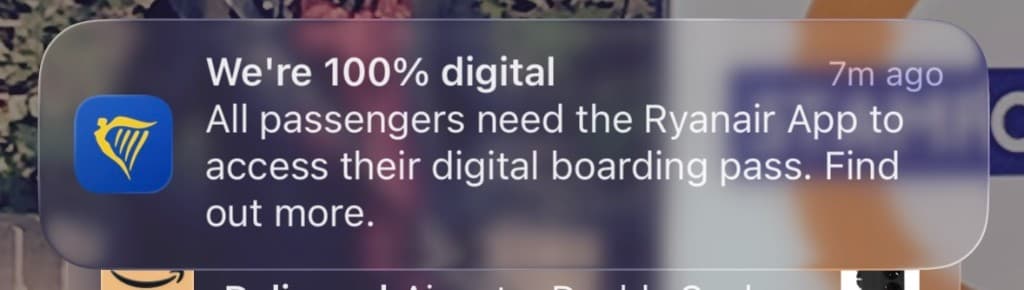
Every digital boarding pass means:
- One less printed document
- One less queue
- One less interaction with staff
- And often underestimated... one more opportunity to sell add-ons
None of these changes saves a huge amount on its own. But across hundreds of millions of passenger journeys, the savings add up. The app makes self-service the default, reducing the people and physical processes needed to serve each passenger. And every interaction moved into the app creates another opportunity to sell a seat, bag, priority boarding or another add-on. It reduces the cost to serve while creating more opportunities to earn.
Turning Booking into Retail
Once these core operations move into the app, Ryanair also has many more opportunities to sell. Seat selection, priority boarding, extra baggage, car hire and hotels are nothing new. What Ryanair does well is offer them at moments when they are most relevant. Even 25 minutes before takeoff, you might get a notification inviting you to order food and drinks for the flight.
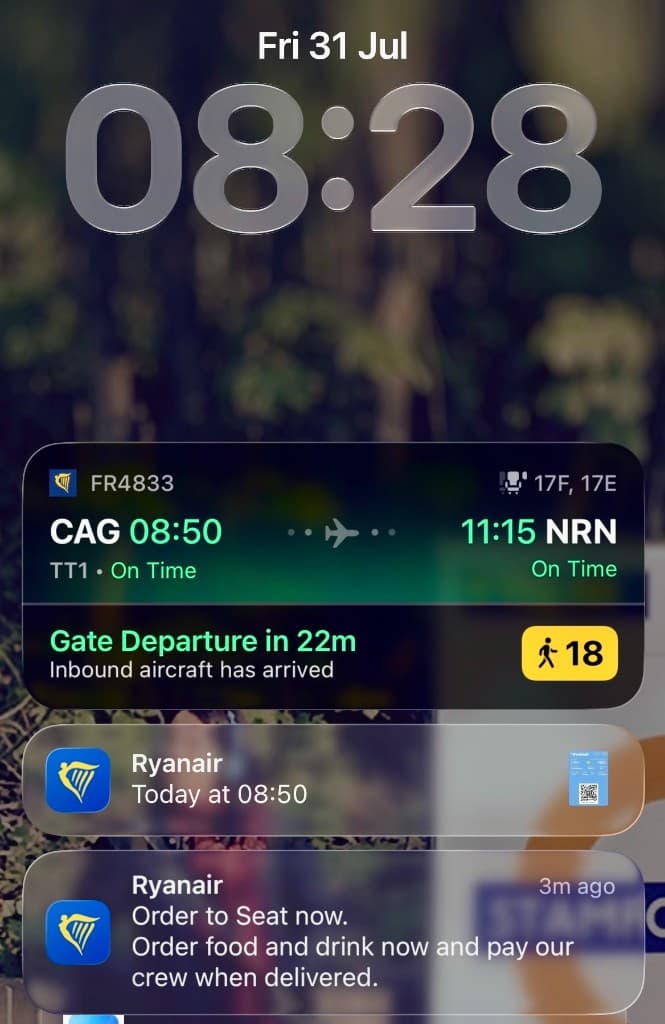
The app makes these add-ons easy to discover, well timed and quick to buy, because they are built directly into the journey rather than presented as a separate shop.
And crucially, they are high-margin. Over 40% of Ryanair's revenue comes from these add-ons. Not because users love add-ons, but because the app makes saying “yes” effortless. This is where many products get it wrong. They separate “core experience” and “monetisation.” Ryanair merges them.
For sharper thinking on what makes products succeed,follow me on
Owning the Customer Relationship
There's another layer to this strategy that is less visible, but arguably more important: Direct bookings. Every time a customer books through the app instead of a third party:
- Ryanair avoids commission fees
- Retains full control over pricing
- Owns the customer relationship
The app becomes a control centre. Push notifications reduce missed flights and customer service load. Logged-in users can rebook in seconds. The entire journey becomes tighter, faster, more predictable, and cheaper to run.
Data as the Multiplier
Behind the scenes, the app is constantly learning: what users search for, what they ignore, where they hesitate, and what they ultimately buy. That data feeds personalisation, pricing strategies and the timing of offers, so the system improves itself with better recommendations, smarter upsells and higher conversion, all without adding any visible complexity.
The Lesson
Ryanair's mobile strategy works because it starts with a different way of thinking about the role of the app.
The app is not simply a digital companion to the airline. It is part of how Ryanair runs the airline. It moves operational work to the passenger, reduces the cost of serving them, keeps Ryanair in direct contact throughout the journey, and creates more opportunities to sell. The same product makes the business both more efficient and more profitable.
That is the Mobile Mindset in practice: start with what mobile can fundamentally change about how your business works.
Closer to Home
There is also a personal reason I pay close attention to Ryanair. I spend part of my life in Cagliari, the capital of the beautiful Mediterranean island of Sardinia. Ryanair has, in many ways, unlocked the island for its residents including myself. Its network allows me to live and work between Cagliari, London and Amsterdam with remarkable ease.
So I use the Ryanair app a lot. And the more I use it during my travels, the more I appreciate the thinking behind it.

About the author
Hi, I'm Ivo. Mobile & AI Product Leader, Exited Founder, Best-Selling Author and Early-Stage Investor. Over 20 years, I've created and shipped successful, high-growth products used by millions of people. For startups, scale-ups, and enterprises. Recently I have been leading the first AI-powered education apps for schools worldwide.